
Common sea routes
International ocean routes are international routes that run through one or several oceans. They are worldwide routes, and ships from all countries can navigate freely on the ocean routes. In the ocean routes are traveling are large tonnage can navigate long-distance ships. The international ocean routes include the Pacific Ocean route, the Indian Ocean route and the Atlantic Ocean route. The routes through the Panama Canal and the Suez Canal also belong to the ocean routes, especially the routes from the Atlantic coast through the Mediterranean Sea and the Indian Ocean to the Pacific Ocean region across the three oceans are more representative of the international ocean routes.
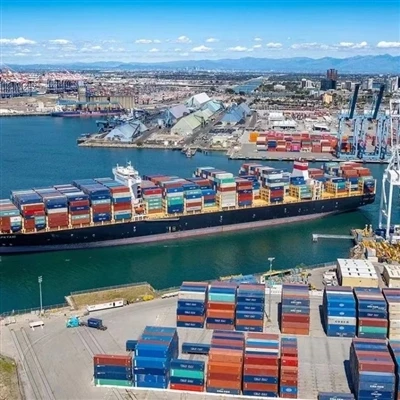
The world's major ocean routes
I. Pacific Ocean Route
① Far East and North America West Coast Route
② Far East a Caribbean, North America East Coast Route
③ Far East and South America West Coast Route
The route from the ports of Northeast Asia through the Hawaiian Islands south of the Lane Islands, crossing the equator into the South Pacific Ocean to the West Coast of South America ports.
④ Far East - Southeast Asia and Indian Ocean route
⑤ Far East - Australia and New Zealand route.The route is divided into two: one from the northern coastal areas of China and Japanese ports through the Ryukyu Islands, across the Caroline Islands, into the Solomon Sea, the Coral Sea to the east coast of Australia and New Zealand ports; the other from the ports of China and Japan through the Bintulu Strait of the Philippines into the Sulawesi Sea, and then through the Manggasi Strait and Lombok Strait of Indonesia southward to ports on the west coast of Australia.
⑥Australia-New Zealand-North America East and West Coast Route
The route is also divided into two: one departs from Australia and New Zealand, turns northeast through Suva of Fiji, crosses Honolulu of Hawaiian Islands to the ports on the west coast of North America; the other departs from Australia and New Zealand and goes eastward, passes through the port of Papeete of the Socialist Islands, crosses the Panama Canal and reaches the ports on the east coast of North America.
In addition to the above six important routes, other routes in the Pacific Ocean are: North American ports and Southeast Asian routes, the west coast of the Americas offshore routes.
Second, the Indian Ocean route
In the Indian Ocean region, there are mainly trans-Indian Ocean east-west ocean routes, access to the Persian Gulf coast oil-producing countries of the three important routes.
The trans-Indian Ocean east-west ocean routes include:
① Far East and Southeast Asia and East Africa route
② Far East and Southeast Asia, a Mediterranean Sea, Northwest Europe route
③ Far East and Southeast Asia, a Cape of Good Hope, West Africa, South America route
③ Far East and Southeast Asia, Cape of Good Hope, West Africa and South America
⑤ the northern Indian Ocean region, a European route
In this group of routes, the Strait of Malacca at the eastern end and the Suez Canal at the western end are two pivotal locations.
The three important Persian Gulf oil routes are:
① Persian Gulf - Cape of Good Hope - Western Europe and North America route
This route is the world's leading maritime oil transportation route.
② Persian Gulf - Southeast Asia - Japan route
The route east through the Strait of Malacca (200,000 deadweight tons of ships below the feasible), or through Indonesia's Lombok, Makassar Strait (200,000 deadweight tons of super tankers above the feasible) to Japan.
Persian Gulf, Suez Canal, Mediterranean Sea, Western Europe and North America route.
The route can pass 300,000 tons of super tankers.
Third, the Atlantic route
Atlantic routes to the east coast of the United States as the center, by the east coast of North America, the Great Lakes, a northwest Europe, the Mediterranean Sea route between the composition. The important ones are:
① Northwest Europe and the east coast of North America route
The shipping area in winter wind and waves, and fog, icebergs, posing a greater threat to navigation safety.
② Northwest Europe, the east coast of North America, a Caribbean route
③ Northwest Europe, the east coast of North America, Gibraltar, the Mediterranean Sea, the Suez Canal, the Indian Ocean, Asia-Pacific route
This route is the world's busiest section of transportation, is the Northwest Europe, North America and Asia-Pacific Gulf region between the transport of trade shortcuts, also known as the Suez Canal route.
④Northwest Europe, Mediterranean Sea and East Coast of South America route.
⑤ Northwest Europe, North America East Coast, West Africa, Central and South Africa, Cape of Good Hope, and Far East.
This route is an oil transportation line for giant tankers from the Asian Gulf to Western Europe and North America.
(6) South America East Coast - Cape of Good Hope - Far East Route
The route is the South American East Coast ports to the Asian Gulf region to transport oil, or Northeast Asian countries to Brazil to buy ore often take the transportation line.
Fourth, the main international containerized maritime transport routes
Four major containerized trade areas, namely, North America, Western Europe, the Far East and Australia, the containerized cargo volume to account for 80% -90% of the total amount of freight.
International containerized ocean transportation has the North Pacific route, the North Atlantic route and the European route three main routes.
①North Pacific route
By the Far East, a North American Pacific coastline route and the Far East, a North American Atlantic coastline route, the main trunk lines are Japan, a California route, Japan, a Seattle, Vancouver route, Japan, a New York route and so on.
②North Atlantic Route
By Europe, the United Kingdom, a North American east coast routes, the Mediterranean Sea, a North American east coast routes, the Great Lakes, a European shipping class and so on.
③European route
It consists of Europe-Australia route, Far East-Europe and Mediterranean Sea route.
In addition to the three main routes, there is the Far East and Australia and New Zealand routes, Australia and New Zealand and North America routes, Europe, the Mediterranean Sea, West Africa, South Africa routes and other three container trunk lines. Above these six to some of the world's major trade areas connected to the container shipping trunk routes, coupled with the distribution of many of the container transportation in all regions of the world branch line, constituting the international containerized marine transportation network.


